
God Became All Things
Anthropos and cosmos

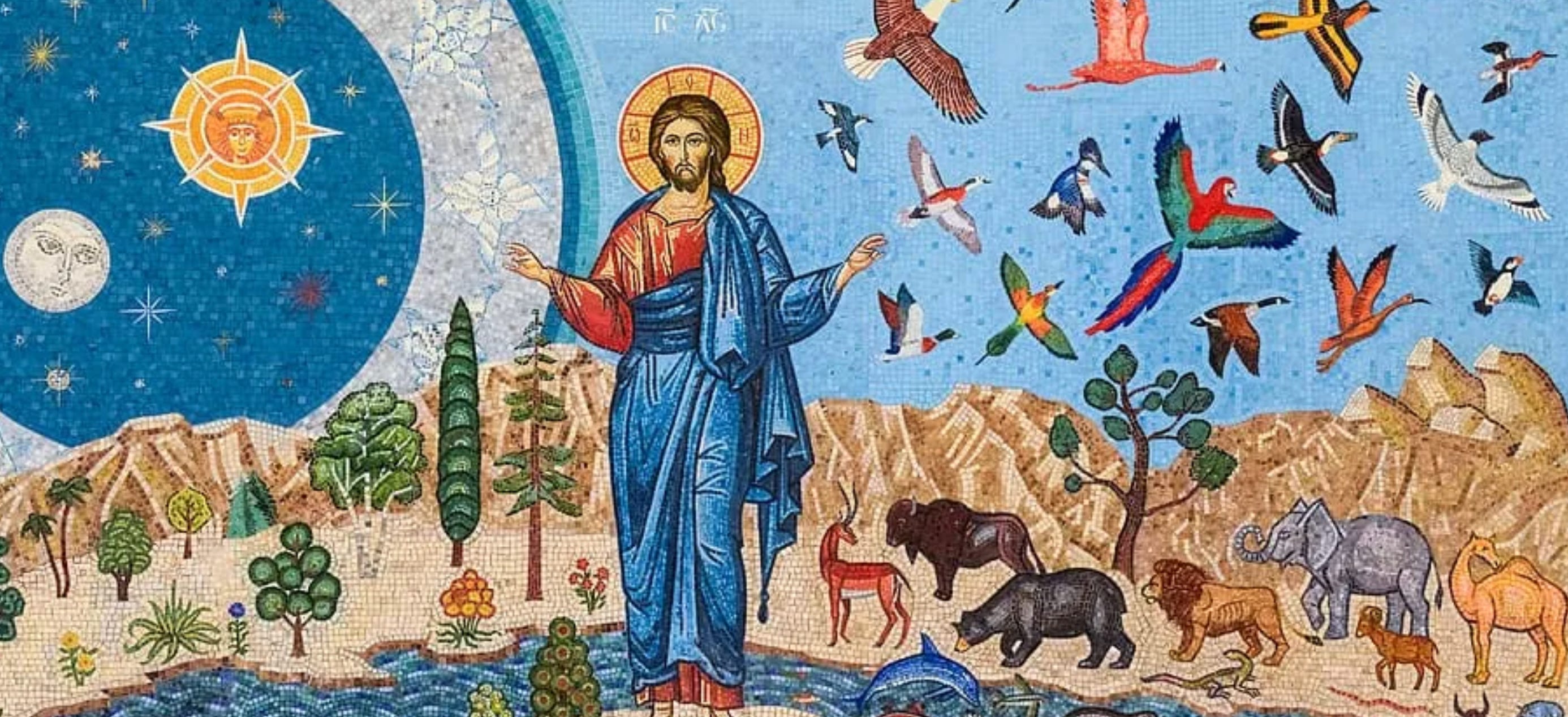
“For in him all things were created, in heaven and on earth, visible and invisible . . . all things were created through him and for him. And he is before all things, and in him all things hold together” (Col. 1:16-17).
It is sometimes alleged that Christianity is fatally anthropocentric. God became man. Not angel, not irrational animal, not plant, not mineral — man. By so wedding himself to one creature, God estranged himself from all others. So the argument goes.
This perspective has a grain of truth. Christianity recognizes that man is special, yes. However, his specialness turns on his comprehensive nature. Man gathers up all things in himself. Thus, the incarnation is not exclusive, but inclusive. Condescending to become anthropos, God united (and still unites) himself with the entire cosmos.
Why the incarnation? Sin is the proximate and conditional cause, of course. But the goodness of God is the remote and unconditional cause. Goodness is self-communicative. Hence, the greatest good tends to communicate itself in the greatest manner: God wishes to share himself to the utmost with creation, which recommends his personal union therewith.
But if this principle be true, why did God not become, say, a rat, a dandelion, a pebble? Something less noble than man, who stands near the apex of creation? Moreover, by becoming man, did God not exclude many other creatures from a certain intimacy with himself? Did his self-communicativeness not evince a limit, betraying a defect in his goodness?
The answer to this apparent conundrum lies in the nature of man. Man is a miniature of the universe. As a rational animal, he contains the intellectual realm and the material realm, being their intersection and fusion point. He summarizes every sort of creature in himself, either actually by nature or virtually by knowledge (itself a function of his nature).
In one respect, man is like the angel, in that he knows and wills; in another, like the animal, in that he moves and senses; in another, like the plant, in that he grows and reproduces; in another, like the mineral, in that he subsists with some measure of stability. Thus, the ancients called anthropos the micro-cosmos, and cosmos the macro-anthropos.
Whatever is in man is in the universe expansively and diffusely; whatever is in the universe is in man intensively and briefly. Wherefore man is called the image of God, because he captures and expresses all the wisdom of God in a single essence, displaying the range of divine self-manifestation (creation being an exhibition of the divine fruitfulness).
Consequently, in becoming man, God became all things, for man contains all things, even is all things. Had God become anything else, he would not have comprehended within his assumed nature the full scope of creaturely being. He would have left something outside himself, as it were. In which case, his mission to glorify the whole universe by the communication of his splendor would have failed. But becoming man, he touched — touches — everything, and his humanity is a fit instrument for the general mediation of the divine majesty.
Man is not foreign to the extremes of creation. Indeed, in man, the extremes are not foreign to each other. What is in creatures is in man; and man, in Christ, is in God. So God is and will always be all and in all.
“For the creation waits with eager longing for the revealing of the sons of God. For the creation was subjected to futility, not willingly, but because of him who subjected it, in hope that the creation itself will be set free from its bondage to corruption and obtain the freedom of the glory of the children of God” (Rom. 8:19-21).
Human work product; AI not used in the writing or editing process.
Beautiful and succinct presentation of Christ’s recapitulation. Thank you for this!